
Best Practices for Payment Data Analytics in iGaming
Explore how payment data analytics can enhance user experience, prevent fraud, and ensure compliance in the iGaming industry.

Want to improve payments in iGaming? Here’s how payment data analytics can help you:
-
Better User Experience: Match payment methods to player preferences for smoother transactions.
-
Quick Fixes: Spot and resolve payment failures in real time.
-
Informed Choices: Use data to optimise payment flows and boost efficiency.
-
Fraud Prevention: Detect risky behaviours and prevent fraud with AI-powered tools.
For operators in Malta, it’s especially important to follow MGA regulations, use the € currency, and ensure compliance with GDPR. Focus on secure payment systems, real-time monitoring, and adapting to local payment habits.
Quick Takeaways:
-
Set up secure systems with encryption, dynamic routing, and API integrations.
-
Track key metrics like transaction success rates, user preferences, and fraud patterns.
-
Leverage AI for fraud detection, behavioural analysis, and regional adaptation.
-
Use dashboards and maps to visualise data and identify trends.
Payment analytics isn’t just about compliance - it’s about enhancing trust, improving user satisfaction, and staying competitive in the iGaming market.
Revolutionizing iGaming Analytics: Introducing the Blask Index with Max T. | AIBC Sigma Pitch 2024

Setting Up Payment Analytics Systems
Effective payment analytics requires a secure infrastructure and adherence to Malta Gaming Authority (MGA) regulations. Below, we break down the essential technical components and compliance measures needed to establish a reliable analytics system.
Technical Setup Requirements
To start, ensure secure data collection at every payment point. This includes integrating with various payment methods, each with its own requirements:
| Payment Type | Processing Time | Key Requirements |
|---|---|---|
| Traditional Banking | 1-3 business days | Secure encryption, 3DS support |
| E-Wallets | Up to 24 hours | API integration, real-time validation |
| Cryptocurrencies | 10-60 minutes | Blockchain monitoring, KYC checks |
| Local Methods | Up to 24 hours | Regional compliance, local format support |
The system must adhere to Malta’s specific standards, such as using the correct currency format (€ 1,000.00) and date format (DD/MM/YYYY). To ensure smooth operations, include the following technical components:
-
Dynamic Transaction Routing: Automatically reattempt soft declines by routing through alternative processors, improving success rates.
-
Real-time Monitoring: Simultaneously track transaction statuses, user activities, and potential fraud.
-
Data Encryption: Protect all stored and transmitted payment data with enterprise-grade encryption.
These elements form the backbone of a secure and efficient payment analytics system, ensuring compliance with stringent regulations.
Meeting Regulatory Standards
Compliance with MGA and GDPR requirements is non-negotiable. The following table outlines key regulatory needs and their implementation methods:
| Requirement | Implementation Method | Frequency |
|---|---|---|
| KYC Verification | Document validation, biometric checks | Real-time |
| Transaction Monitoring | AI-powered analysis | Daily |
| Risk Assessment | Behaviour analysis | Monthly |
| Regulatory Reporting | Automated filing system | Quarterly |
To meet these standards, operators should:
-
Implement standardised data protocols.
-
Use automated compliance calendars.
-
Conduct regular internal audits.
Compliance isn’t just about legal obligations. A well-structured system improves payment reliability and user trust. Additionally, incorporating AI-driven fraud detection tools can further secure transactions. For example:
| Feature | Purpose | Implementation Priority |
|---|---|---|
| Behavioural Analysis | Detect session anomalies | High |
| Pattern Recognition | Identify irregular betting | Medium |
| Device Fingerprinting | Prevent collusion | High |
Payment Performance Metrics
These metrics build upon the earlier technical and regulatory frameworks, aiming to enhance operational efficiency and build user confidence. By focusing on payment performance, businesses can streamline operations and significantly improve the user experience.
Transaction Success Metrics
Tracking transaction success rates is essential for identifying and resolving bottlenecks. Here’s a breakdown of common failure points:
| Failure Type | Common Issues |
|---|---|
| User-Side | Insufficient funds, incorrect payment details, or expired cards |
| Technical | Gateway timeouts, processor errors, and connectivity problems |
| Compliance | Security flags, regulatory restrictions, or fraud detection mechanisms |
Processing speed also plays a pivotal role in user satisfaction:
| Transaction Type | Target Speed | Impact on User Experience |
|---|---|---|
| Deposits | Instant | Enables immediate access to gaming or services |
| Withdrawals | Under 24 hours | Builds trust and fosters user loyalty |
These metrics are invaluable for identifying friction points while also setting the foundation for analysing user behaviour patterns.
User Payment Behaviour Metrics
Understanding how users interact with payment systems goes beyond just speed and success rates. By analysing payment patterns, businesses can gain deeper insights into user preferences and regional trends. For instance:
| Region | Leading Payment Method | Market Share |
|---|---|---|
| India | UPI | 75% |
| UK | Debit Cards | 50% |
To optimise the payment experience further, focus on:
-
Real-time monitoring: Keep a close eye on transaction success rates across various payment methods.
-
Automated recovery: Use smart routing to retry failed transactions seamlessly.
-
User preference analysis: Adapt payment options based on user trends and regional behaviour.
Analytics for Fraud Prevention
With fraud in iGaming increasing by over 60% between 2022 and 2024, and nearly 1 in 10 transactions now flagged as risky, using analytics to combat fraud has become a critical focus.
User Behaviour Analysis
Tracking user behaviour can reveal important red flags. Here’s how specific patterns can indicate risks and the steps to mitigate them:
| Behaviour Pattern | Risk Indicators | Prevention Measures |
|---|---|---|
| Transaction Patterns | Unusual deposit behaviours | Set dynamic limits based on user history |
| Geographic Data | Multiple accounts from the same IP address | Apply geolocation filters and monitor IP activity |
| Gaming Activity | Irregular betting or strange wager types | Use individual risk profiling to flag anomalies |
| Device Usage | Repeated use of the same device across accounts | Implement device fingerprinting and blacklist suspicious devices |
To further secure platforms, strengthen user verification with multi-level authentication that combines payment data and behavioural insights.
- Identity Verification
Use stringent Know Your Customer (KYC) protocols, requiring official identity documents and multi-factor authentication to confirm user legitimacy.
- Transaction Monitoring
Regularly analyse transaction trends to detect unusual activity. Focus on areas such as:
-
Sudden spikes in deposit or withdrawal speeds
-
Cross-border transactions
-
Irregularities in currency conversions
-
Frequent switching between payment methods
When combined with AI-driven tools, these measures significantly improve the ability to detect and prevent fraudulent activities.
AI Fraud Detection
AI and machine learning are game-changers in fraud prevention, capable of processing vast amounts of data in real time. In 2022 alone, U.S. businesses lost $1.59 billion to payment fraud. By leveraging behavioural insights, AI automates fraud detection and prevention with impressive precision.
| Component | Function | Impact |
|---|---|---|
| Predictive Analytics | Identifies potential fraud in advance | Allows proactive interventions |
| Pattern Recognition | Spots unusual user behaviour | Flags suspicious activities efficiently |
| Risk Scoring | Assigns risk levels to transactions | Supports automated decision-making |
| Chargeback Prevention | Tracks and prevents fraudulent chargebacks | Reduces revenue loss from disputes |
AI, combined with behavioural analysis, creates a strong, data-driven shield against fraud. It safeguards user data and financial transactions without sacrificing system performance. To further enhance security, encrypt sensitive information using AES-256 algorithms, implement tokenisation, and ensure systems are updated regularly. Additionally, training staff to recognise phishing tactics adds another layer of protection to this comprehensive approach.
Multi-Currency Payment Management
Expanding on earlier discussions around metrics and fraud prevention, multi-currency payment management takes things a step further by streamlining payment performance across different currencies. Leveraging advanced analytics can boost conversion rates while creating a smoother user experience. The global multi-currency payments market, currently valued at €82.86 billion in 2023, is forecasted to grow to €161.48 billion by 2030. Below, we dive into the key metrics and regional insights that shape effective multi-currency management.
Currency Conversion Analysis
Effective currency conversion management is all about balancing costs while keeping players satisfied. To achieve this, monitoring specific metrics is crucial:
| Metric Type | What to Track | Why It Matters |
|---|---|---|
| Exchange Rates | Real-time rate fluctuations | Helps reduce conversion costs |
| Conversion Fees | Transaction costs per currency pair | Fine-tunes pricing strategies |
| Settlement Duration | Time taken for currency settlements | Minimises exposure to rate changes |
| User Preferences | Patterns in currency selection | Improves default currency settings |
Tracking these metrics allows for smarter automation and transparent fee structures, which ultimately enhance conversion performance. For instance, one gaming platform reported a 9%+ improvement in acceptance rates after making adjustments based on these insights.
Regional Payment Method Analysis
With cross-border payments projected to climb by over 65% to €267 trillion by 2030, understanding regional payment behaviours is more important than ever.
| Region | Key Analysis Points | Action Items |
|---|---|---|
| Transaction Patterns | Popular payment methods locally | Focus on offering preferred options |
| Acceptance Rates | Success rates of payment methods | Optimise underperforming systems |
| Regulatory Compliance | Local processing regulations | Adapt payment flows as needed |
| Customer Support | Time zone and language coverage | Align support with peak usage times |
“High-risk industries, such as online gaming, often grapple with challenges like elevated decline rates, high processing fees, and complex regulatory landscapes. In these environments, effective payment solutions are essential for success.”
- Israel Waks, VP of Sales and Customer Success at GumBallPay
To excel in multi-currency management, businesses should implement dynamic currency conversion, analyse transaction data at the country level, collaborate with reliable currency providers, stay up-to-date with local regulations, and monitor payment acceptance trends. These strategies can make a world of difference in navigating the complexities of global payments.
Payment Data Visualization
Building on earlier metrics and fraud prevention insights, clear data visualization helps transform raw numbers into actionable strategies. Tools designed for visualizing payment data simplify complex information, making it easier to spot trends and opportunities.
Real-time Analytics Dashboards
Analytics dashboards serve as central hubs for monitoring payment performance in real time. They provide a snapshot of key metrics and help businesses stay on top of their operations. Here’s a breakdown of some essential dashboard elements:
| Dashboard Element | Purpose | Metrics |
|---|---|---|
| Transaction Overview | Monitor current performance | Success rates, transaction volume, average value |
| Payment Method Distribution | Track payment preferences | Usage percentages, conversion rates by method |
| Risk Indicators | Spot potential issues | Decline rates, fraud attempts, chargebacks |
| Revenue Trends | Analyse financial performance | Daily, weekly, and monthly comparisons |
| User Segments | Understand player behaviour | Deposit patterns, preferred payment methods |
By comparing real-time data to historical averages, businesses can quickly identify any performance dips or anomalies. Beyond these metrics, geographic maps add another layer of insight by highlighting regional trends.
Transaction Location Maps
Geographic visualizations, like transaction location maps, uncover patterns in user behaviour and reveal market opportunities. These maps can include features like:
| Map Feature | Implementation | Business Value |
|---|---|---|
| Heat Maps | Colour-coded transaction density | Pinpoint high-activity regions |
| Time-based Filtering | Analyse patterns over time | Optimise payment method availability |
| Payment Method Overlay | Show usage by region | Shape regional payment strategies |
| Conversion Rate Display | Highlight success rates by location | Focus on areas needing improvement |
To make these maps as effective as possible, it’s important to follow a few best practices:
-
Privacy Compliance: Always ensure that location data collection meets local regulations and obtain user consent where required.
-
Regional Integration: Consider factors like popular payment methods, average transaction values, peak activity hours, and any specific regulatory requirements in each region.
-
Dynamic Updates: Keep the data fresh by monitoring transaction patterns and fraud trends, and adjust payment methods based on real-time usage.
This visual approach doesn’t just make data easier to digest - it strengthens decision-making across all aspects of payment performance.
AI Payment Analytics with Fluid
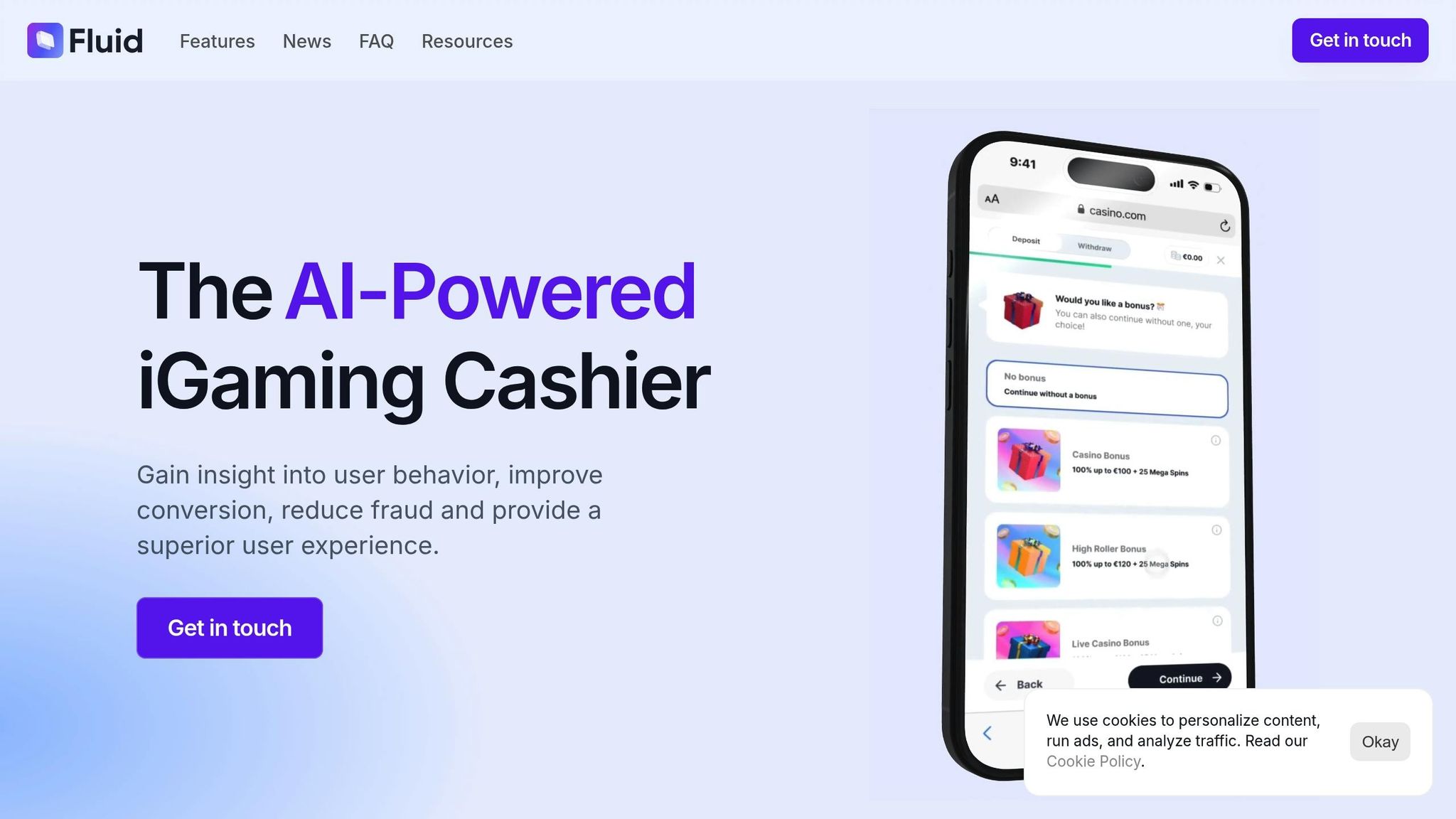
AI-powered analytics is reshaping how payment systems are optimised in the iGaming sector. Building on traditional data visualisation methods, this approach takes things further by using advanced tools to refine payment processes and improve user experiences.
Fluid’s AI technology dives deep into transaction data and user behaviour to craft personalised payment journeys. By leveraging data insights, operators can fine-tune their payment flows to align with how users interact with the system.
In February 2025, Canadian operator PowerPlay adopted Fluid’s AI-powered cashier technology to enhance its payment systems. Dean Serrao, CEO of PowerPlay, highlighted the impact of this integration:
“PowerPlay is committed to providing the best possible experience for our players, and fast, secure payments are a huge part of that. With Fluid’s technology, players will enjoy a more intuitive and localized payment experience, making deposits faster and smoother. This partnership also enhances our operational efficiency, ensuring we continue to deliver top-tier gaming experiences.”
Fluid’s system offers more than just basic analytics. Its standout features include:
| AI Feature | Function | Business Impact |
|---|---|---|
| Dynamic Testing | Real-time A/B testing of deposit workflows | Boosts conversion rates |
| Behaviour Analysis | Tracks user preferences | Recommends tailored payment methods |
| Fraud Detection | AI-driven risk assessment | Reduces fraud while ensuring smooth transactions |
| Local Adaptation | Optimises payment journeys for specific regions | Increases conversion rates in diverse markets |
These features work together to create a payment system that’s not only secure but also highly personalised. By adapting to individual player preferences while maintaining strong security measures, the technology addresses two critical needs in iGaming: trust and convenience.
Roberto Rubio, CEO of Fluid, underscored the importance of this balance:
“We’re thrilled to welcome PowerPlay to the Fluid network. They’re a fantastic operator with a clear focus on player experience, and we’re excited to provide them with an advanced payments solution that directly contributes to their bottom line.”
The AI analytics system continuously learns from user interactions, refining payment flows to reduce friction and enhance the overall experience. Its real-time capabilities allow operators to quickly identify and address potential issues, ensuring high conversion rates and protecting both players and the business.
Conclusion: Improving Results with Payment Analytics
In the iGaming world, payment data analytics has become a game-changer, helping operators achieve greater profitability. By diving into these insights, businesses can fine-tune their operations across technical setups, user experience, and compliance.
For example, operators have improved checkout processes by studying cart abandonment trends. These patterns reveal where users face obstacles, allowing businesses to implement precise fixes.
Key areas where payment analytics make a difference include:
| Focus Area | Impact | Business Benefit |
|---|---|---|
| User Behaviour | Reveals preferred payment methods and habits | Tailored payment experiences |
| Transaction Success | Tracks and enhances payment flow performance | Fewer failed transactions |
| Regional Adaptation | Understands local payment preferences | Better market-specific conversions |
| Risk Management | Detects unusual patterns and fraud attempts | Stronger security measures |
The rise of AI-powered analytics has taken payment optimisation to the next level. Real-time monitoring helps operators resolve issues as they arise, while detailed tracking provides a clearer understanding of user behaviour.
For operators in Malta, integrating localised analytics for € transactions is critical to staying competitive. By analysing payment data regularly and focusing on key performance metrics, businesses can improve user satisfaction and achieve better outcomes. This ongoing effort ensures advancements in fraud prevention, multi-currency handling, and AI-driven solutions, keeping operators ahead in this fast-moving industry.
FAQs
How do AI-powered tools help prevent fraud in iGaming payments?
AI-driven tools are game-changers in tackling fraud within iGaming payments. By analysing transaction data in real time, these tools can spot unusual patterns and flag potentially suspicious activities. What makes them even more effective is their ability to keep up with evolving fraud tactics, offering strong protection while keeping false alarms to a minimum.
On top of that, AI takes over tasks like risk assessments and monitoring transactions, automating these processes for better security. This not only strengthens fraud prevention but also ensures a smoother experience for users. With AI in the mix, iGaming platforms can provide a safe and hassle-free payment process, boosting user trust and satisfaction.
What compliance requirements must iGaming operators in Malta meet for payment data analytics?
iGaming operators in Malta must comply with MGA regulations, which set rigorous requirements for data reporting, anti-money laundering (AML) measures, know your customer (KYC) protocols, and financial transparency. These regulations are designed to create a secure and reliable gaming environment for everyone involved.
Additionally, operators need to complete the 2025 Risk Evaluation Questionnaire (REQ) via the CASPAR portal and provide annual financial reports. To stay compliant, payment data analytics must meet these regulatory standards, ensuring proper oversight. Adopting compliant analytics practices not only helps operators meet these obligations but also boosts operational efficiency and builds user confidence.
How does real-time monitoring enhance payment success rates and player satisfaction in iGaming?
Real-time monitoring is a game-changer when it comes to boosting payment success rates. By spotting and resolving issues as they happen, it helps cut down on transaction failures and smooths out the approval process. The result? Payments that flow effortlessly and efficiently.
For players, this means a secure and hassle-free payment experience, which is key to earning their trust and keeping them satisfied. Fewer delays and errors mean happier users, which naturally leads to better engagement and loyalty - making the iGaming experience all the more enjoyable.